


Meta Description: Is the mind flayer vecnae? Learn how Stranger Things connects the two villains, from the Upside Down hive mind to the final season’s biggest reveal.
Is the Mind Flayer Vecnae? The Real Connection Between Stranger Things’ Two Biggest Villains
Spoiler warning: this article discusses plot points from every season of Stranger Things, including the final one. If you have not finished the show, bookmark this page and come back later. Few debates have kept fans arguing in group chats and comment sections quite like the one behind the search “is the mind flayer vecnae.” The shadowy, spider-shaped monster that terrorized Hawkins in the middle seasons and the grotesque, vine-covered killer who haunted the later ones feel like two sides of the same coin, and the show spent years teasing exactly how they fit together.
The short version is that they are not literally the same being, but they are far more entangled than most villains in television ever manage to be. One is a collective hive mind from the Upside Down, and the other is a human boy who became something monstrous. Over the following sections, we will untangle the timeline, explain the lore, compare the two side by side, and look at why the writers chose to blur the line between them. By the end, you will know exactly where one villain stops and the other begins.
The Short Answer Before We Dig Deeper
If you only have a minute, here is the answer: Vecna and the Mind Flayer are two separate entities with a deeply intertwined history. The Mind Flayer is the hive mind, the vast psychic network that links the creatures of the Upside Down, while Vecna is Henry Creel, a human being who gained enormous psychic power and learned to command that network. For much of the story, Vecna acts as the master of the Mind Flayer, which is why so many viewers decided the answer to “is the mind flayer vecnae” must be a simple yes.
The truth turned out to be subtler and more interesting. The final stretch of the series revealed that the relationship ran in both directions, with the hive mind leaving its mark on Henry long before he ever became a feared villain. Neither one is a pure puppet or a pure puppeteer, and that gray area is exactly why the question refuses to die. It is less a riddle with a single answer and more a case study in how a clever mythology can hide its real shape until the perfect moment.
Meet the Mind Flayer: The Villain of Seasons Two and Three
The Mind Flayer first appeared in the second season, released in 2017, as a towering, spider-like shadow that loomed over Hawkins during storms. The kids gave it that name in a nod to the tabletop role-playing game Dungeons and Dragons, which they played in Mike’s basement, because its psychic abilities reminded them of the mind-controlling monster in the game. Its first major victim was Will Byers, who was possessed by the creature and became a spy for it, feeling its thoughts and carrying its commands. Those scenes were deeply unsettling because the threat was not just physical. It could invade your mind.
In the third season, the Mind Flayer returned in a more visceral way, taking over ordinary Hawkins residents and melting them together into a monstrous body of flesh at the Starcourt Mall. Billy Hargrove became its most tragic host, and the terrifying image of townspeople trudging in a trance toward their doom stuck with viewers for years. Through all of this, the creature acted like a single mind controlling countless bodies, which is the essence of a hive. At that point in the story, nobody was asking whether the Mind Flayer was Vecna, because Vecna had not yet been revealed. That context matters, because the later reveal forced viewers to re-read everything they thought they knew.
Who Vecna Really Is: The Story of Henry Creel

Vecna arrived in the fourth season as a new kind of villain, one whose power operated through memory and trauma. He chose victims who carried deep guilt or pain, cursed them, and killed them through horrifying visions that ended with their bodies breaking in the real world. The mystery around him deepened until the show revealed his identity: he was Henry Creel, also known as Number One, the first child subject in Dr. Martin Brenner’s experiments at Hawkins National Laboratory. Long before Eleven, Henry was the original test subject with extraordinary abilities, and he was also a deeply disturbed young man.
Henry’s story is a tragedy and a horror story at the same time. After a childhood marked by isolation and cruelty, he used his powers to commit terrible acts, and when Eleven confronted him at the lab in 1979, she hurled him into the Upside Down, where he transformed into the creature known as Vecna. The name itself comes from Dungeons and Dragons, where Vecna is a famously powerful undead wizard, and the show leans into that source with the Hawkins kids using the name as a gamer’s label for the monster. Understanding Henry as a human being, not a demon born in another dimension, is the first key to understanding how he differs from the creature that haunted earlier seasons.
Understanding the Hive Mind and the Shadow Monster
To answer the central question, you have to understand what the Mind Flayer actually is in the show’s mythology. It is not a single animal with a single brain in the way a Demogorgon is. It is more like a living network, a hive consciousness that connects the creatures of the Upside Down, including Demogorgons, Demodogs, and Demobats, and it can extend its influence into human minds through contact. The shadow monster that people saw in the sky was a physical manifestation of that network, built from the materials of the Upside Down, particularly the swirling ash and particles that fill its atmosphere.
That detail is crucial, because those particles become the bridge between the Mind Flayer and Vecna in the later story. Particles connected to the hive mind carry its influence, and anyone exposed to them can be changed. This is why the creature can possess people, spy through them, and command them, and it is also why a gifted psychic like Henry could eventually do something extraordinary with the same system. The network is a kind of power grid, and whoever learns to control it gains control over everything plugged into it. That idea sits at the center of nearly every theory about the villains.
Season Four and the Great Reveal
When the second half of the fourth season arrived, the show finally put the pieces together for the audience. Vecna was revealed to be the one steering the Mind Flayer, a master who had seized control of the hive mind and shaped it according to his own vision. The giant spider shape, the show suggested, was not random. It reflected Henry’s own fascination with spiders and predators, and he had effectively sculpted the swirling particles into a body that matched his imagination. In other words, the iconic monster fans had feared for two seasons was partly an extension of Vecna’s will.
That revelation changed how viewers saw the earlier seasons. Suddenly, the possession of Will, the horror at Starcourt, and even the way the creatures behaved were part of a long game. It also explained why Vecna could command Demogorgons and Demodogs, since they all belonged to the same network he had mastered. For many fans, this was the moment the question “is the mind flayer vecnae” went from a joke to a serious theory, because the show had just blurred the boundary between master and servant. Still, controlling something is not the same as being it, and the writers had a bigger twist waiting.
Why So Many Fans Treat Them as One Villain
There are several good reasons the two feel like a single villain. First, they share a purpose: both want to break through into the human world and reshape it. Second, they share an aesthetic. The vines, the dark organic textures, and the creeping red lightning that surrounds Vecna match the visual language of the Upside Down and the Mind Flayer, so they look like products of the same nightmare. Third, the show often uses one as a stand-in for the other, with Vecna giving orders and the creature carrying them out in the real world.
There is also a storytelling reason. Horror stories often work best when the monster feels unified, and merging the villains into one big threat simplifies the stakes for the audience. When a viewer hears that a human mastermind controls a monstrous hive mind, the natural shorthand becomes “they are basically the same.” That shorthand is understandable, but it overlooks the important difference between a person and the network he commands. Keeping that difference in mind makes the final season’s reveal land much harder.
Season Five: The Final Twist About Henry and the Mind Flayer
The fifth and final season, released in late 2025, finally delivered the explanation the Duffer Brothers had promised. In interviews, the creators said the connection between the two villains was “a question that will be answered in the final episode.” When that episode arrived, it revealed through a deep dive into Henry’s most traumatic memory that he had been affected by the Mind Flayer as a child. A particle connected to the creature, hidden in a rock in a scientist’s briefcase, was what first touched him and changed the course of his life.
According to reporting on the finale and on comments from actor Jamie Campbell Bower, who plays Vecna, the bond between Henry and the Mind Flayer was so strong that he saw the two of them as partners rather than master and servant. Instead of simply being its controller, he believed they were working together, and he refused to betray it even when betrayal might have saved him. The ending also saw both the Mind Flayer and Vecna meet their end. So the final answer to “is the mind flayer vecnae” is no, they were not the same being, but they were bound together so tightly that neither story makes sense without the other.
The Prequel Play That Quietly Set Everything Up
Part of the reason the finale felt earned is a stage production called Stranger Things: The First Shadow, which premiered on London’s West End in 2023. The play tells the story of a teenage Henry Creel in 1959 Hawkins and shows how a lonely, troubled boy with strange abilities begins to encounter forces he does not understand. Many fans who saw it noticed that the play hinted heavily at a connection between Henry and the creatures of the Upside Down, and the later seasons of the show echoed that material.
The creators even suggested that parts of the final episode would overlap with the play, and elements of Henry’s school days and a cave setting appeared in the fifth season as Max wandered through his memories. For viewers who skipped the stage show, those moments may have felt like fresh reveals, while theater fans recognized them as threads pulled from a longer tapestry. The lesson for anyone researching this topic is that the full picture of the Henry and Mind Flayer relationship is spread across both the television series and the prequel play, which makes the mythology richer but also easier to misread.
Vecna and the Mind Flayer Compared Side by Side
Sometimes the clearest way to understand two characters is to line them up and compare their key traits. The table below breaks down how the two villains differ and where they overlap, using the information the series makes available.
| Feature | The Mind Flayer | Vecna |
|---|---|---|
| Nature | Collective hive mind of the Upside Down | Human psychic transformed by the Upside Down |
| First Appearance | Season two | Season four (identity revealed in the second half) |
| Core Ability | Possession and mass control through particles | Psychic curses, mind invasion, and control of the hive mind |
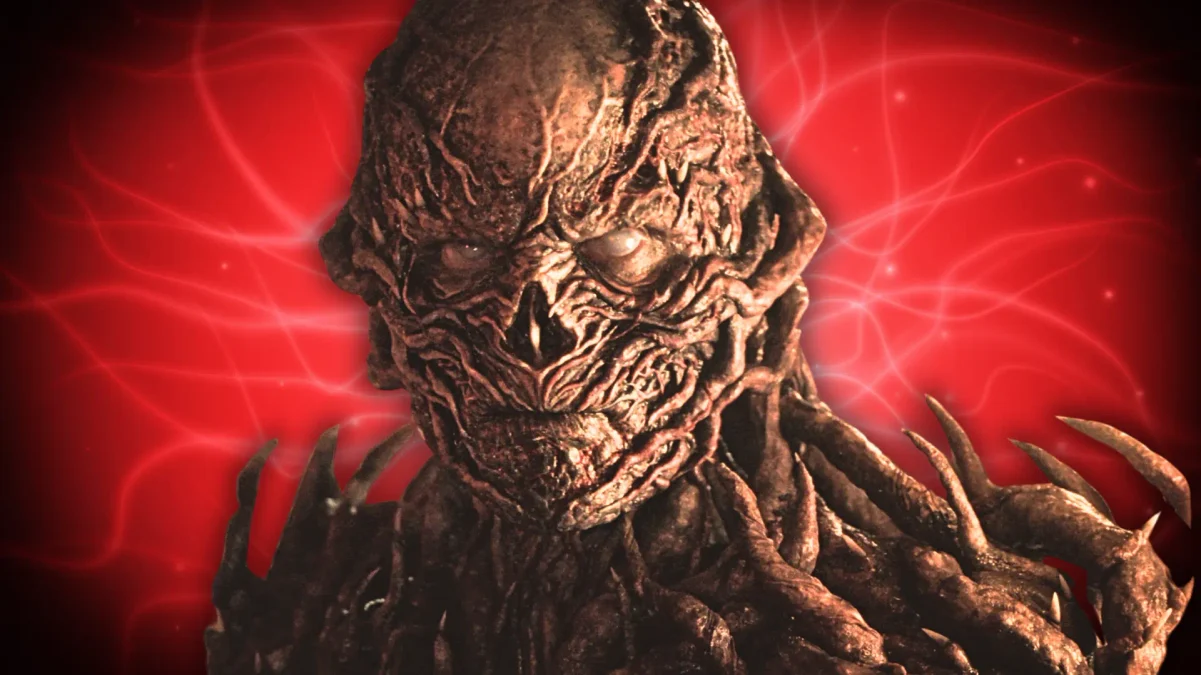
| Physical Form | Giant spider-like shadow and flesh monster | Humanoid figure covered in vines and scarred flesh |
| Origin | Existed in the Upside Down before Henry’s arrival | Born as Henry Creel, later known as Number One |
| Relationship to the Other | Influenced Henry as a child through connected particles | Learned to command the hive mind and shape its body |
| Fate | Destroyed in the final stretch of the series | Defeated in the finale |
Looking at the chart, you can see how each villain compensates for what the other lacks. The Mind Flayer provides scale, an army of minds and bodies, and Vecna provides intelligence, cruelty, and personal vengeance. Together they form a single threat that is larger than either one could be alone, which is exactly why the line between them keeps blurring.
Who Controlled Whom? The Great Fan Debate
For years, fans split into two camps on the central power question. One side argued that Vecna was the true mastermind, a genius who bent the hive mind to his will and used it as a weapon. The other side argued the opposite, claiming that the Mind Flayer had been manipulating Henry from the start and that Vecna was merely its most successful puppet. Even cast members joined the conversation, with a leaked interview clip in which Noah Schnapp casually suggested the Mind Flayer was the one pulling Vecna’s strings, which only poured fuel on the debate.
The finale landed somewhere in the middle, which feels fitting for a story about psychological manipulation. Henry was shaped by the hive mind as a child, and he later became powerful enough to shape the hive mind in return. As Friedrich Nietzsche famously warned, “He who fights with monsters should be careful lest he thereby become a monster.” That line could almost be a motto for the entire relationship, because Henry did not simply fight or command the Mind Flayer. He merged his identity with it, and the two reflected each other until it became impossible to say who started the cycle.
Where the Name Vecna Comes From
The name Vecna did not come from nowhere. In Dungeons and Dragons, Vecna is one of the most iconic villains in the game’s history, a lich, which is a powerful undead wizard, known for his thirst for secrets and power. The game’s lore even includes the legendary Hand of Vecna and Eye of Vecna, cursed artifacts that grant great power at a terrible cost. The show borrowed this tradition on purpose, since the kids in Hawkins use their gaming knowledge to understand the monsters they face.
The same applies to the Mind Flayer, which in the game is a terrifying aberration with tentacles that feeds on brains and dominates other creatures through psychic power. By giving both villains names from the tabletop world, the writers created a language the characters and the audience could share. It also means the question of whether the two are connected has a built-in game-world flavor, because in many campaigns, powerful villains and monstrous minions regularly work together without being the same creature. The Duffer Brothers took that familiar fantasy structure and wrapped it in 1980s small-town horror.
The Spider Symbolism and Why It Matters
Spiders appear again and again in the visual language of the series, and that choice is not accidental. The Mind Flayer’s body resembles a giant arachnid with long, jagged legs, and the show later linked this design to Henry’s childhood interest in predators and spiders. A spider is a patient hunter that builds a web and waits, and that image fits both villains perfectly. The Mind Flayer spreads through a network of connected minds, and Vecna spins webs of memory and guilt that trap his victims.
This symbolism also reinforces the idea that the two are deeply tied. If the creature’s body was shaped by Henry’s imagination, then its terrifying form is partly a portrait of his inner life. That makes the monster less like a random beast and more like a mirror, and it explains why so many viewers feel that one villain is the face of the other. It is a smart bit of visual storytelling, because it lets the audience feel the connection long before the plot spells it out.
How the Writers Built the Mystery
The way the series handled this reveal is a masterclass in long-form storytelling. Instead of explaining everything at once, the writers dropped hints across multiple seasons, letting fans connect the dots. The Mind Flayer appeared in seasons two and three as a monstrous force with unclear origins, Vecna appeared in season four with a human backstory, and the final season tied both threads together with a memory sequence that reframed what came before. Every reveal built on the last, and each one invited viewers to re-evaluate their assumptions.
That patience carries a risk, because long gaps between seasons let fans invent their own answers, and the debate around “is the mind flayer vecnae” grew louder with every passing year. Yet the payoff worked because the clues were genuinely planted. The spider obsession, the particle imagery, the hive mind powers, and the prequel play all pointed in the same direction. It is a reminder that great mysteries do not need to be solved quickly; they need to be solved fairly.
Common Misconceptions Worth Clearing Up
One of the biggest misunderstandings is that Vecna is simply the Mind Flayer wearing a human face. That makes for a neat theory, but it ignores the fact that the two have separate origins, separate abilities, and separate fates. Another misconception is that Vecna created the hive mind from nothing. The network existed in the Upside Down before Henry arrived, and what he did was learn to control it and shape its physical expression, not invent it.
A third mistake is assuming that the Mind Flayer was a mindless puppet. The finale suggested that its influence on Henry was real and that the bond between them carried emotional weight, at least from his perspective. Treating either villain as a simple tool flattens what is actually a complicated relationship. When you hold all of this in mind, a clear and accurate answer to “is the mind flayer vecnae” becomes possible: they are different beings who became inseparable.
What This Means for a Rewatch
Knowing the full truth makes a rewatch of the series feel like a brand-new experience. In season two, the scenes where Will shares the creature’s thoughts take on a darker tone, because you know the same network later shaped the man who would become Vecna. In season three, the horror of the flesh monster feels even more disturbing, since it is part of a continuous thread that leads straight back to Henry’s childhood. Even small details, like the creature’s hunger for control and its preference for spreading through people, start to echo Vecna’s personality.
You may also notice how often the show uses mirrors, doubles, and reflections. Eleven and Henry are mirror images of each other, both children raised in the same lab with enormous powers, and the Mind Flayer and Vecna mirror each other too. The series is built on the idea that power can both create and corrupt, and the central villain pair represents that theme in its purest form. If you finished the show quickly and want to appreciate its craft, a slow second viewing is well worth your time.
Conclusion
So, is the mind flayer vecnae? The honest answer is no, but with a very important asterisk. The Mind Flayer is the vast hive mind of the Upside Down, and Vecna is Henry Creel, a human who gained terrifying power, learned to command that hive mind, and was himself shaped by it long before he ever became a legend of Hawkins horror. They share a body of imagery, a goal, and an ending, yet they remain two distinct characters whose relationship is the real heart of the story.
What makes this storyline so satisfying is that it refuses to settle for a simple twist. Instead of declaring one villain secretly the same as the other, the series built a partnership that was part master and servant, part symbiosis, and part tragic obsession. That complexity gives the finale its emotional punch and gives fans plenty to debate for years to come. Whether you consider Vecna the mastermind or the Mind Flayer the true puppeteer, the show’s last lesson is that the most dangerous monsters are the ones we feed, and the ones that learn to feed on us in return.
Frequently Asked Questions
The following answers address the questions fans ask most often about this tangled relationship.
Each one reflects what the series and its creators have revealed, with spoilers included for the entire run.
Is the mind flayer vecnae or are they different characters?
They are different characters. The Mind Flayer is the hive mind and shadow monster of the Upside Down, while Vecna is Henry Creel, a human who was transformed after being sent into that dimension. The reason people often ask whether the mind flayer vecnae is the same being is that Vecna controls the creature for much of the story and the two share a visual style and goal.
Did Vecna create the Mind Flayer?
Not exactly. The hive mind existed in the Upside Down before Henry arrived, but Vecna learned to command it and shaped the swirling particles into the spider-like body the audience saw. In the final season, the series also revealed that the Mind Flayer’s influence touched Henry first, so the relationship was a two-way street rather than a simple case of creator and creation.
Who was stronger, Vecna or the Mind Flayer?
The answer depends on what you measure. The Mind Flayer had scale, with an army of creatures and the ability to possess many people at once, while Vecna had intelligence, personal power, and the skill to direct that scale with precision. Together they were far stronger than either was alone, which is why the question of whether the mind flayer vecnae are essentially one threat keeps coming up in fan debates.
What happens to Vecna and the Mind Flayer at the end of the series?
According to coverage of the finale, both villains die in the final episode, closing the long story that began in the early seasons. The ending also reveals the child Henry’s first contact with a particle tied to the hive mind, which explains how his transformation began and why the two were so tightly linked.
Where does the name Vecna come from?
The name comes from Dungeons and Dragons, where Vecna is a legendary lich known for cursed artifacts and a hunger for secret knowledge. The Hawkins kids named the villain after that character, just as they named the Mind Flayer after the mind-controlling creature from the same game, which is part of why the show’s gaming roots feel so woven into its mythology.
Can I understand the Vecna and Mind Flayer connection without seeing the stage play?
Yes, the television series gives you enough to follow the main story, including the final reveal about Henry’s childhood. The stage play Stranger Things: The First Shadow adds extra depth by showing a younger Henry and expanding on how he first encountered the forces that shaped him, so watching it can enrich your understanding, but it is not required to answer the core question behind “is the mind flayer vecnae.”