
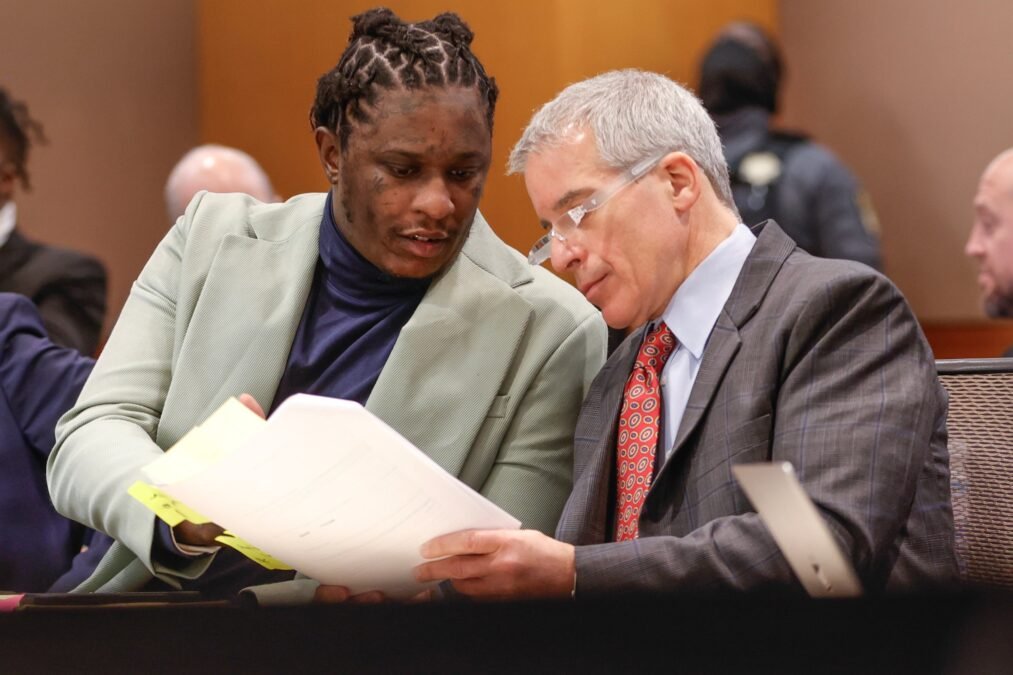

Brian Steel: The Atlanta Defense Attorney Behind Some of Hip-Hop’s Biggest Legal Battles
Meta Description: Brian Steel is the Atlanta defense lawyer from the Young Thug YSL trial. Explore his career, courtroom style, famous cases, and legacy.
Every so often, a lawyer steps out from behind the defense table and becomes a household name. That does not happen often in criminal defense, where the best work usually happens quietly, in motions filed at midnight and in appellate briefs that only a handful of judges ever read. Yet over the past few years, one Atlanta attorney has managed to become a familiar face to people who have never set foot in a courthouse. He has appeared in livestreamed hearings, in documentary segments, in news headlines, and even in the lyrics of a Drake album. For a profession that prizes discretion, that is a remarkable kind of fame.
That attorney is Brian Steel, and the attention he has received is rooted in a career that stretches back more than three decades. Long before cameras followed him into a Fulton County courtroom, he was an assistant public defender learning how to try cases with limited resources and enormous stakes. Over the years he built a practice known for meticulous preparation, aggressive motion work, and a deep record of success on appeal. The famous clients came later, and they arrived because of the reputation he had already earned in the less glamorous corners of the legal system.
This article walks through the full picture. We will look at where he came from, how his firm took shape, what made his appellate record unusual, and how his role in the Young Thug racketeering trial changed his public profile. We will also cover his high-profile work with other well-known clients, his approach to the courtroom, the controversies that have followed him, and the lessons that aspiring attorneys and curious readers can take from his story. Whether you found his name through a news alert or a song lyric, you should come away understanding why it keeps coming up.
Who Is Brian Steel and Why Does His Name Keep Surfacing
At the simplest level, Brian Steel is a criminal defense attorney based in Atlanta, Georgia, who has practiced since 1991. He is a partner at The Steel Law Firm, a practice he runs alongside his wife, Colette Resnik Steel, who is also a criminal defense lawyer. His work covers state and federal courts, and it includes both trial advocacy and appellate litigation. That combination is less common than people assume, because many lawyers excel at one arena and only tolerate the other. He has built a reputation for being comfortable in both, and that versatility is a big part of why high-stakes clients tend to look in his direction.
The reason his name surfaces so often in the news comes down to the nature of the cases he takes. Criminal defense at the highest level is a field where a single trial can run for months or even years, and where public interest can turn an ordinary hearing into a national event. When a rapper, a music executive, or a well-known public figure faces serious charges, the lawyer standing beside them becomes part of the story. Steel has been in that position more than once, and each appearance has added to the sense that he is a go-to name when the stakes are as high as they get.
It is also worth noting that his recognition within the legal profession predates his celebrity clients by many years. He has been named a Georgia Super Lawyer every year since 2004, and he was a finalist for the Fulton County Daily Report’s Attorney of the Year award in 2017. He is also a Fellow of the American College of Trial Lawyers, an invitation-only organization that includes some of the most accomplished trial attorneys in North America. Those honors matter because they come from peers and legal publications rather than from media buzz, and they show that his standing was built on substance.
Early Career: Learning the Craft as a Public Defender
Every lawyer has a formative chapter, and for this attorney it was his time in the Fulton County public defender’s office. He worked there as an assistant public defender from 1991 to 1993, which is the kind of job that teaches lessons no classroom can. Public defenders carry heavy caseloads, face tight deadlines, and often have to prepare for trial with far fewer resources than the prosecution enjoys. The experience forces a young lawyer to learn quickly, to triage effectively, and to find creative ways to level an uneven playing field. Many of the most respected defense attorneys in the country started in exactly this kind of role.
It is also a role that shapes how a lawyer thinks about clients. Public defenders represent people who often have no money, no connections, and little understanding of how the system works. Learning to explain the process to those clients, to earn their trust, and to fight for them regardless of the charges builds a certain kind of empathy and a certain kind of toughness. Colleagues who have followed his career often point to this foundation when they describe his approach, noting that the habits formed in those early years never really went away. The work ethic that carried him through crowded dockets became the backbone of the practice he built later.
After leaving the public defender’s office, he joined the Atlanta firm Wolfe and Steel in 1994, where he continued to build his private practice. That three-year stretch gave him a chance to handle a broader range of matters and to develop the relationships that would eventually support a firm of his own. It was a period of growth and experimentation, and it set the stage for the next major step in his career. By the middle of the 1990s, he had enough trial experience and enough confidence to start something new.
Founding The Steel Law Firm in 1997
In 1997, he and his wife Colette launched The Steel Law Firm in Atlanta. Starting a firm is always a gamble, and in criminal defense it is a particularly demanding one, because the work is unpredictable and the clients are often under enormous stress. But the couple built a practice that has lasted well over two decades, and the firm has become one of the better known criminal defense shops in Georgia. Having two experienced defense lawyers under one roof, each with their own strengths, gave the firm an unusual depth and flexibility.
The firm’s reputation rests on a few clear principles. The first is thorough preparation, which means reading every page of discovery, interviewing witnesses, and anticipating how the prosecution will build its case. The second is a willingness to file creative motions, challenging evidence, procedures, and assumptions that other lawyers might accept without a fight. The third is a commitment to preserving issues for appeal, which means that even a trial that ends badly is treated as the start of the next phase rather than the end of the road. This mindset, repeated across hundreds of cases, is a large part of why the firm has endured.
Education also played a role in shaping this path. Before law school, he earned a business degree from the University of Michigan in 1987, and one profile notes that during his law school years he was convinced he would become a tax attorney. That anecdote is a fun reminder that careers rarely follow the script we expect at twenty-two. The analytical habits of a business and tax mindset, the attention to detail and the comfort with complex records, turned out to be valuable tools in the courtroom. Many of the biggest cases he has handled involve mountains of documents, and a lawyer who is comfortable in the details has a real advantage.
A Record Built on Appeals, Not Just Trials
One of the most distinctive features of this attorney’s résumé is his appellate work. According to his professional biography, he has more than three hundred published opinions to his name and roughly forty-five reversals, a record that the same biography describes as making him Georgia’s most successful criminal appellate attorney. That description comes from his own bio, so it should be read as a claim rather than an independent ranking, but the underlying numbers point to a body of work that is hard to ignore. Reversals on appeal are rare in criminal cases, and a lawyer who wins that many of them has clearly mastered a difficult craft.
To understand why that matters, it helps to know how appeals work. After a conviction, a defendant generally cannot simply argue that the jury got it wrong. Instead, the appeal must identify specific legal errors, such as improperly admitted evidence, flawed jury instructions, or constitutional violations, and show that those errors affected the outcome. That requires meticulous legal research, persuasive writing, and a deep understanding of precedent. It is a very different skill set from trial advocacy, and it rewards patience and precision rather than showmanship.
The two skill sets reinforce each other in a way that clients benefit from. A lawyer who knows how appellate courts think will try the case differently, making a record that can be defended later and objecting at the right moments to preserve issues. A lawyer who has stood before a jury knows which legal arguments will matter in practice. His biography describes his approach as built on exhaustive preparation, creative and novel motions, and skillful appellate advocacy, and that summary captures the way these pieces fit together. The result is a practice in which the trial is never the only chance to win.
The Young Thug YSL Trial That Changed Everything
For most of the public, the story begins with the racketeering case against the rapper Jeffery Williams, known as Young Thug, and several co-defendants. The prosecution alleged that the YSL collective was a criminal street gang, and the indictment drew national attention because it relied in part on song lyrics and social media posts. It became one of the longest criminal trials in Georgia history, with a slow and complicated jury selection process followed by months of testimony. Steel served as the lead defense attorney for Williams, and his presence at the center of the courtroom drama made him a recognizable figure.
The case raised broad questions that extended well beyond the individuals involved. Critics of the prosecution argued that using artistic expression as evidence risked chilling free speech and unfairly targeting a genre of music. Supporters of the prosecution responded that the lyrics were relevant to the alleged conspiracy and that the charges were based on a broader pattern of conduct. Whatever one thought of the arguments, the trial turned into a national conversation about the role of art in criminal cases, and the defense team was at the center of it. The proceedings were livestreamed, which gave viewers an unusual window into the strategy and tension of a major trial.
The case ultimately resolved in late 2024 through a negotiated plea that led to the rapper’s release, bringing an end to a legal saga that had stretched across years. For the attorney, the trial was both a professional marathon and a public coming-out. He had spent decades doing exceptional work out of the spotlight, and now millions of people could see him in action. That exposure changed the trajectory of his career, bringing new clients, new media attention, and a place in popular culture that few criminal defense attorneys ever achieve.
The Contempt Showdown With the Judge
No account of the trial would be complete without the dramatic confrontation that occurred in the summer of 2024. The presiding judge, Ural Glanville, held the attorney in contempt of court after he refused to reveal the source of information about a private conversation between the judge, the prosecutor, and a witness. The defense argued that such a conversation was an improper ex parte communication, meaning that it happened without the defense present, and that the way the information reached them should be protected. The judge insisted on knowing the source and found the lawyer in contempt for refusing to say.
The standoff briefly threatened to put one of the most visible defense lawyers in the country behind bars while the trial was still underway. Local coverage reported that the Supreme Court of Georgia granted him bond while the contempt finding was appealed, which allowed him to remain free and continue working on the case. Legal observers took note of the episode, in part because it highlighted a classic tension in the justice system, the clash between a judge’s authority to run a courtroom and a lawyer’s duty to protect confidential sources and defend a client zealously. Supporters rallied around him, including fellow trial attorneys who attended court to show solidarity.
Regardless of how one views the underlying dispute, the episode revealed something about his character. He was willing to risk jail rather than compromise a principle, and that willingness is exactly what many clients look for in a defense lawyer. It also illustrated the stakes of high-profile litigation, where a procedural fight can become front-page news overnight. For law students and young attorneys, it served as a vivid case study in professional ethics, the limits of judicial power, and the courage that defending an unpopular position can require.
Courtroom Style and Strategy
Describing a courtroom style in words is always a little tricky, but a few themes come up repeatedly in coverage of this attorney’s work. The first is preparation. Observers describe a lawyer who knows the record cold, who can cite the right page of the right transcript at the right moment, and who is rarely caught flat-footed. Preparation is not glamorous, but it is the foundation of nearly every successful defense, and it often separates good lawyers from great ones. In a long and document-heavy trial, that discipline is a genuine competitive advantage.
The second theme is persistence. Defense work often means making objections that are likely to be overruled, filing motions that are likely to be denied, and preserving arguments that may only pay off years later on appeal. A lawyer who keeps pushing, politely but firmly, creates opportunities that a more passive attorney would miss. This persistence can frustrate judges and prosecutors, but it also protects clients, because it ensures that every possible issue has been raised and every possible avenue explored. It is a style built on the belief that the defense should never leave anything on the table.
The third theme is the ability to connect with a jury and with a client. Trials are ultimately decided by people, and the lawyer who can communicate clearly and credibly has a real advantage. Defense attorneys have long relied on a principle often attributed to the jurist William Blackstone, that it is better that ten guilty persons escape than that one innocent suffer. Whatever one thinks of the arithmetic, that idea sits at the heart of the adversarial system, and it explains why lawyers who defend unpopular clients are considered essential rather than villainous. A strong defense is not an obstacle to justice, it is part of how justice is supposed to work.
Career Milestones at a Glance
Looking at a career in a single view can help put the pieces in context. The table below pulls together the major milestones discussed so far, drawn from public biographies and news coverage. It is meant as a quick reference rather than an exhaustive record, and the dates reflect the information available in published sources. Readers who want a deeper look at any single entry will find more detail in the surrounding sections.
| Milestone | Details |
|---|---|
| Education | Business degree from the University of Michigan in 1987, followed by law school |
| Public defender | Assistant public defender in Fulton County, Georgia, from 1991 to 1993 |
| Early private practice | Partner at Wolfe and Steel in Atlanta from 1994 to 1997 |
| Firm founding | The Steel Law Firm launched in 1997 with his wife, Colette Resnik Steel |
| Professional honors | Georgia Super Lawyer every year since 2004; 2017 Attorney of the Year finalist |
| National recognition | Fellow of the American College of Trial Lawyers |
| Appellate record | More than 300 published opinions and roughly 45 reversals, per his professional bio |
| Landmark case | Lead defense attorney for Young Thug in the YSL racketeering trial |
| Later high-profile work | Joined defense teams for Lil Durk and Sean Combs |
The table underscores how steadily the career has built over time. There is no single moment that explains the reputation, but rather a long accumulation of trial work, appellate victories, and professional recognition. The famous clients, impressive as they are, sit at the end of a long road rather than at the beginning. That context matters, because it shows that the public profile is the result of substance rather than the other way around.
Joining the Lil Durk Defense Team
Another headline moment came when the attorney joined the defense team for the rapper Lil Durk, whose real name is Durk Banks, in a federal case in Los Angeles. According to reporting, the case centered on a 2022 shooting that killed Saviay’a Robinson, the cousin of the rapper Quando Rondo, and federal prosecutors brought multiple charges. The defense team was led by the veteran attorney Drew Findling, and Steel joined as part of a broader group working on the case. A 2026 news item described a motion for him to join the legal team, which fits with his pattern of being brought in when a case needed additional trial firepower.
Coverage following the trial reported that the rapper was acquitted on all five federal charges. That outcome drew attention because federal prosecutors win convictions in the vast majority of cases that go to trial, and an across-the-board acquittal is a rare result. It would be a mistake to credit any single lawyer for a verdict, since trials are the product of whole teams, evidence, witnesses, and the decisions of twelve jurors. Still, being part of a defense team that wins a full acquittal in federal court is a significant professional achievement, and it added another chapter to the story.
The case also showed how modern defense work often operates as a collaboration. High-stakes federal cases tend to involve multiple senior lawyers, each with their own strengths, who divide responsibilities across opening statements, witness examinations, motions, and strategy. Having a lawyer with deep trial experience and a strong appellate background on the team provides flexibility and protection. For clients facing years or decades in prison, that kind of depth is not a luxury but a necessity.
The Sean Combs Case and a Return to the National Spotlight
In 2025, the music mogul Sean Combs, widely known as Diddy, hired the attorney as part of the legal team preparing for his federal trial. News outlets noted the connection to the Young Thug case right away, treating the hire as a sign that Combs wanted a lawyer with experience in complex, high-profile proceedings. The case drew enormous public attention, and the defense lawyers involved were closely watched by reporters and commentators throughout the process. The trial ended with a mixed verdict, in which the jury acquitted on the most serious charges while convicting on lesser ones.
For observers interested in legal strategy, the case offered a lesson in how defense teams approach multi-count indictments. When prosecutors bring several charges, the defense often focuses on the counts that carry the greatest penalties, building the case to create reasonable doubt on those first. A mixed outcome can still represent a meaningful success if the most serious counts fail. Commentary at the time emphasized that the result should be understood in the context of what the defense was facing at the start, rather than as a simple win or loss.
It is also fair to note that cases like this one generate strong opinions. Many people feel uneasy when a prominent lawyer defends a client accused of serious misconduct, and that discomfort is understandable. The legal profession answers that concern with a principle that every accused person deserves a vigorous defense, and that the system only works when both sides do their jobs. Defense lawyers do not endorse their clients’ alleged conduct, they test the government’s evidence. That role is uncomfortable at times, but it is a foundation of the justice system.
Beyond the Courtroom: Running, Reputation, and Pop Culture
Away from the courthouse, the attorney has a reputation as a dedicated distance runner. The Atlanta Journal-Constitution once profiled him under a headline describing him as a marathon-running lawyer, drawing a natural parallel between the endurance required to run 26 miles and the stamina needed to survive a trial that lasts for months. The comparison fits. Long trials reward people who can pace themselves, stay focused when fatigue sets in, and keep performing at a high level day after day. It is a tidy metaphor, and it seems to reflect something real about how he approaches the work.
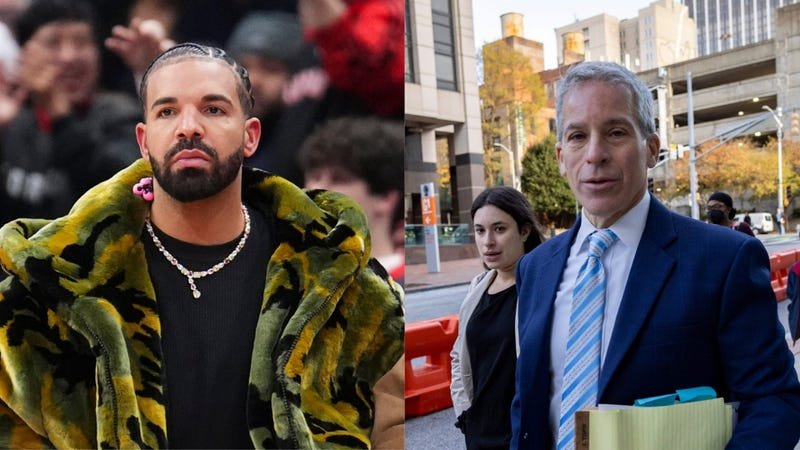
His public profile has also spilled into popular culture in ways that few lawyers experience. In early 2025, Drake and PartyNextDoor released a song titled with his name, and entertainment outlets reported on his reaction to the tribute. Having a song named after you is not something most attorneys can expect, and it speaks to the way the Young Thug trial resonated with music fans. The moment also illustrated how the line between law and entertainment has blurred, as livestreamed trials and social media commentary turn courtroom figures into recognizable personalities.
That kind of fame comes with trade-offs. Attention can bring new opportunities, but it can also invite scrutiny and criticism, and lawyers who become public figures must balance their duties to clients with the pull of the spotlight. The best defense attorneys tend to keep the focus on the client and the case, and the long arc of this career suggests a lawyer who understands that balance. The song and the headlines are fun footnotes, but the substance of the work remains in the preparation, the motions, and the appeals.
What Aspiring Lawyers Can Learn From This Career
There is plenty for law students and young attorneys to take from this story. The first lesson is that reputation is built slowly. Before the celebrity clients and the livestreamed hearings, there were years of public defender work, small firm practice, and appellate briefs that never made the news. Anyone hoping to build a career in criminal defense would do well to remember that the high-profile cases are the visible tip of a very large iceberg. Skill, credibility, and relationships are built case by case and year by year.
The second lesson is the value of versatility. A lawyer who can try cases, argue appeals, and work with a team has more options than a specialist who can only do one thing. In a field where outcomes depend on many moving parts, the ability to move between roles is powerful. It also makes a lawyer a better collaborator, since each skill set informs the others. Students who want to stand out would be wise to develop both oral advocacy and strong writing, because the best practitioners tend to excel at both.
The third lesson is about ethics and resilience. Defense work means standing beside people at the worst moments of their lives, often while the public is skeptical or hostile. It takes thick skin and a strong sense of principle to do that well. The contempt episode in the Young Thug trial, whatever one thinks of its details, shows how those principles can be tested in real time. Aspiring lawyers should know that the profession will sometimes ask them to hold a line that is uncomfortable, and that preparing for that moment is part of the job.
Common Misconceptions About High-Profile Defense Attorneys
Popular culture has given many people a distorted picture of what criminal defense lawyers do. Television dramas tend to focus on dramatic confrontations and surprise witnesses, while the reality involves mountains of paperwork, long negotiations, and careful legal analysis. The glamorous courtroom moments are real, but they sit atop weeks or months of unseen preparation. A lawyer like the one profiled here is more likely to win by finding a flaw in a search warrant than by delivering a cinematic speech, and that gap between perception and reality is worth understanding.
Another misconception is that a defense lawyer must believe their client is innocent. In practice, the job is to hold the government to its burden of proof, not to vouch for a client’s character. Prosecutors must prove guilt beyond a reasonable doubt, and the defense’s role is to test that proof. This distinction is easy to forget in emotionally charged cases, but it is central to how the system works. The idea that everyone deserves representation is not a loophole, it is a safeguard that protects every person who might one day be accused.
A final misconception is that celebrity cases are fundamentally different from ordinary ones. The people and the attention are different, but the legal questions are often the same. Was the evidence collected properly? Do the charges fit the facts? Did the government respect the defendant’s rights? The skills that matter in a headline case are the same ones that matter in a quiet felony docket, which is why a career built on solid fundamentals translates so well to the biggest stages. That consistency is probably the best explanation for the long arc of this career.
Conclusion
The story of this Atlanta defense lawyer is a story about patience, preparation, and principle. It began in a public defender’s office in the early 1990s, grew through the founding of a family-run firm in 1997, and was strengthened by decades of trial work and appellate victories. Along the way, he earned recognition from peers, a place among the nation’s elite trial lawyers, and a record on appeal that stands out in Georgia legal circles. The famous cases came later, but they rested on a foundation that was already solid.
The Young Thug trial, the confrontation over contempt, the work on behalf of Lil Durk, and the involvement in the Sean Combs case have each added to a public profile that few defense attorneys ever achieve. They have also sparked healthy debate about the role of defense lawyers, the use of artistic expression in criminal cases, and the way modern trials intersect with media and culture. Whether you admire the work or have questions about it, there is no denying that it has shaped the conversation about criminal justice in recent years.
For anyone searching for Brian Steel, the most useful takeaway is that the headlines are only part of the picture. Behind the famous names and the viral moments is a career defined by hard work, careful study, and a stubborn belief that every person accused of a crime deserves a vigorous defense. That belief is not always popular, but it is essential, and it is the thread that ties the whole story together. As long as high-stakes trials continue to capture public attention, this is a name that will keep coming up.
Frequently Asked Questions
Who is Brian Steel?
Brian Steel is an Atlanta-based criminal defense attorney who has practiced since 1991 and is a partner at The Steel Law Firm, which he founded with his wife, Colette Resnik Steel, in 1997. He handles trial and appellate work in both state and federal courts and is a Fellow of the American College of Trial Lawyers. He became widely known to the public through his role in the Young Thug racketeering trial.
What is Brian Steel best known for?
Most people know him as the lead defense attorney for the rapper Young Thug in the long-running YSL case in Fulton County, Georgia. He is also known for his appellate record, his involvement in the defense of Lil Durk, and his role on the legal team for Sean Combs. Within the legal community, he is respected for his preparation and his success in the appeals process.
Why was Brian Steel held in contempt during the Young Thug trial?
During the trial, the presiding judge held him in contempt after he declined to reveal how he learned about a private conversation between the judge, the prosecutor, and a witness. The defense viewed the conversation as an improper ex parte communication and wanted to protect its source. The Supreme Court of Georgia later granted him bond while the contempt finding was appealed, which kept him free to continue working.
Did Brian Steel represent Lil Durk and Sean Combs?
Reports indicate that he joined the defense team for Lil Durk in a federal case in Los Angeles, where the rapper was acquitted on all five charges, and that Sean Combs hired him as part of his legal team in 2025. In both matters he worked alongside other experienced lawyers, which is typical in complex federal cases. Outcomes in trials like these reflect the work of entire teams rather than any one attorney.
Is Brian Steel the same person as Brian Steele the actor?
No. The attorney’s surname is spelled without an extra letter, while Brian Steele, spelled with an e at the end, is a separate person who is a performer known for creature and character roles in film and television. The similar spelling causes frequent confusion in online searches, so it helps to look for context such as Atlanta, criminal defense, or Young Thug to be sure you have the right person.
Where can I learn more about Brian Steel and The Steel Law Firm?
The firm maintains an official website with biographical information, and reputable news outlets have published detailed profiles, including coverage from the Atlanta Journal-Constitution and national publications. The American College of Trial Lawyers also maintains a profile of its fellows. Relying on established sources is wise, since the internet contains many low-quality pages that speculate about topics like personal finances without any verified information.


