


Mets vs Yankees: The Complete Guide to New York’s Biggest Baseball Rivalry
Meta Description: Mets vs Yankees explained: history, ballparks, legends, and the Subway Series moments every New York baseball fan should know.
Every summer, New York City quietly divides itself into two camps. Walk into a deli in Queens and you will probably spot a blue and orange cap on the counter. Step into a barbershop in the Bronx and the pinstripes are almost guaranteed to be on the wall. Offices, families, group chats, and even marriages carry a fault line that runs straight through the middle of the five boroughs. The debate over Mets vs Yankees is not just a conversation about two baseball teams. It is a conversation about identity, loyalty, history, and what it means to love a team when the city next door loves a different one just as fiercely.
What makes this rivalry so fascinating is that it does not look like most others in sports. The Yankees and the Mets play in different leagues, and they spent decades barely crossing paths in meaningful games. They do not fight for the same division title, and for most of baseball history they never even met in the standings. Yet the tension is real, and it simmers year-round. It lives in sports radio arguments, in school lunchrooms, and in the way a fan reacts when a stranger on the subway mentions the other team. It is a rivalry built on geography and personality as much as on wins and losses.
In this guide, we will walk through everything that makes the contest so compelling. We will cover how each franchise began, how the Subway Series came to life, what happened in the unforgettable 2000 World Series, and how ballparks, payrolls, legends, and fan cultures shape the argument. Whether you are a lifelong supporter of one side, a newcomer to New York trying to pick a team, or simply a curious baseball fan, you should leave with a clearer picture of why these two clubs matter so much to the city.
Why This Rivalry Feels Different From Every Other in Baseball
Most great baseball rivalries are built on proximity inside a division. Red Sox and Yankees fans meet in the same standings, trade the same playoff heartbreak, and see each other nearly twenty times a year. Cubs and Cardinals fans live in a similar pressure cooker. The Mets and Yankees have always been something else, a rivalry fueled by civic pride rather than a postseason bracket. Because the clubs live in separate leagues, the stakes of any given game usually come down to bragging rights, and bragging rights in New York are a currency that never loses value.
That absence of a shared standings race is exactly what makes the matchup feel personal. When a Yankees fan and a Mets fan argue, they are not arguing about a wild card spot or a division lead. They are arguing about whose version of New York is the real one. One side talks about tradition, dynasties, and a pantheon of legends stretching back more than a century. The other talks about underdog spirit, the lovable chaos of a team that has lived through miracles and meltdowns, and the pride of rooting for a club that was built from the ground up in a city that already had everything. Neither argument is wrong, which is why the debate never ends.
There is also a deeply human element to the rivalry. Many New Yorkers inherit their allegiance the way they inherit a last name or a favorite food. A grandfather who watched Mickey Mantle in the Bronx will hand down a Yankees fandom that survives three generations. A family that fell in love with the 1969 Miracle Mets or the 1986 champions will pass down a loyalty that feels equally sacred. Because those loyalties are so tied to family, the rivalry carries emotional weight that no simple statistic can capture.
Two Franchises, Two Very Different Origin Stories
The Yankees arrived in New York in 1903, when a Baltimore franchise relocated and eventually became the club the world knows today. For its first couple of decades the team was a modest operation, but everything changed after the arrival of Babe Ruth in 1920 and the opening of the original Yankee Stadium in 1923. The team won its first World Series that same year, and a culture of expectation was born. By the time Lou Gehrig, Joe DiMaggio, and later Mickey Mantle and Yogi Berra took the field, the Yankees had become the standard against which every other franchise measured itself. Winning was not a hope in the Bronx. It was a baseline.
The Mets were born in a completely different context. When the Dodgers and Giants left New York for California after the 1957 season, National League baseball vanished from the city, and a generation of fans was left heartbroken. The Mets were created in 1962 to fill that void, drawing their colors from the departed clubs, with Dodger blue and Giant orange blended together as a tribute. Their first season was a comedy of errors. They finished 40 wins and 120 losses, one of the worst records in modern baseball history. Their manager, the legendary Casey Stengel, summed up the experience with a line that has lived on ever since: “Can’t anybody here play this game?”
Those contrasting beginnings still shape the personality of each fan base. Yankees supporters tend to carry a quiet confidence, a sense that history is on their side and that a championship is a reasonable expectation every October. Mets supporters tend to carry a mix of fierce loyalty, dark humor, and wary optimism. They know the thrill of a miracle because they have lived through a few, and they know the sting of collapse because they have lived through those too. One franchise was built on dominance, and the other was built on belief.
Mets vs Yankees by the Numbers
Numbers do not tell the whole story, but they do help frame the debate. The table below pulls together a handful of the most important facts that separate these two franchises. It gives newer fans a quick way to understand how the clubs compare, and it gives longtime fans some fresh ammunition for the next argument. Treat it as a starting point, because championships and pennants are only one slice of what makes a franchise special.
| Category | New York Mets | New York Yankees |
|---|---|---|
| Founded in New York | 1962 | 1903 |
| League | National League (East) | American League (East) |
| Home ballpark | Citi Field, Flushing, Queens | Yankee Stadium, the Bronx |
| Ballpark opened | 2009 | 2009 |
| Team colors | Blue and orange | Navy and white pinstripes |
| World Series titles | 2 (1969, 1986) | 27 (most recent in 2009) |
| Famous nickname | The Amazin’ Mets | The Bronx Bombers |
| Signature era | Late 1960s and mid 1980s | 1920s through the 1960s, late 1990s |
| Owner type | Steve Cohen, hedge fund billionaire | Steinbrenner family |
| Best-known legend | Tom Seaver | Babe Ruth, Derek Jeter |
The most obvious takeaway is the gap in championships. Twenty-seven titles to two is the kind of statistic that makes Yankees fans smile and Mets fans change the subject. But the table also hides some of the nuance. The Mets have reached the World Series several times, including in 1973, 2000, and 2015, and they have produced some of the most dramatic moments the sport has ever seen. Their fans often argue that a franchise’s value is measured in memories as much as in banners, and anyone who has watched the 1986 run would find it hard to disagree.
Another notable detail is that both ballparks opened in 2009. Citi Field replaced Shea Stadium, and the new Yankee Stadium replaced the House That Ruth Built across the street from the original. That twin transformation gave the city two modern ballparks at the same time, and it gave each fan base a fresh setting for the rivalry. The comparison of Mets vs Yankees has more layers than the win totals alone, and the sections below dig into many of them.
The Birth of the Subway Series
The phrase “Subway Series” predates the Mets by decades. In the early and middle parts of the twentieth century, New York was home to three major league teams, the Yankees, the Dodgers, and the Giants, and when two of them met in the World Series, fans could literally ride the subway from one ballpark to the other. The Yankees played the Giants in several Fall Classics in the 1920s and again in the 1930s, and they met the Dodgers repeatedly in the 1940s and 1950s. Those meetings turned the city into a baseball carnival, with entire neighborhoods split down the middle for a week or two each October.
When the Dodgers and Giants left, the Subway Series disappeared for decades. The Mets tried to keep the spirit alive in the early years through a series of exhibition games. For roughly twenty years, the two clubs played a midseason contest known as the Mayor’s Trophy Game, which raised money for city youth baseball programs. The games did not count in the standings, and neither team treated them with great seriousness, but they gave fans a taste of the matchup and kept the idea alive. When the exhibition ended in the early 1980s, the city was left with a rivalry that existed in conversation but almost never on the field.
That long silence is part of why the eventual return of the Subway Series felt so electric. Fans had spent years arguing about a contest that did not exist, and they had built enormous expectations around it. When the clubs finally met in games that counted, the city responded as though a long-lost family member had walked through the door. The history of the term gives the modern rivalry a sense of continuity, connecting today’s fans to the generations who rode the trains to see Jackie Robinson, Willie Mays, and Mickey Mantle share a city.
The 2000 World Series Explained
If there is a single chapter that defines the rivalry, it is the 2000 World Series. The Yankees were chasing a third straight championship, and the Mets had grinded their way through the National League playoffs behind Mike Piazza, Al Leiter, and a deep supporting cast. For the first time since 1956, the World Series would be played entirely within one city, and New York could hardly contain itself. The Yankees won the series four games to one, but the scoreboard hides how close and how tense the whole thing really felt.
Game 1 set the tone. The Yankees won in twelve innings at Yankee Stadium, 4 to 3, after the Mets had pushed them to the brink. Game 2 produced one of the most talked-about moments in modern baseball history. Roger Clemens, facing Mike Piazza for the first time since hitting him in the head earlier that season, shattered Piazza’s bat and then flung the sharp barrel toward the Mets catcher as he jogged toward first base. Clemens later said he had thought the barrel was the ball. Few people believed it, and the incident became a permanent part of the rivalry’s folklore. The Yankees won that game as well, and the Mets arrived home at Shea Stadium facing an uphill battle.
The Mets answered in Game 3, winning 4 to 2 behind a late rally and giving their fans a night to remember. Derek Jeter began Game 4 with a leadoff home run, and the Yankees took a three-games-to-one lead. In Game 5, the Mets pushed the Yankees to the last inning, and a ninth-inning single by Luis Sojo broke the tie. The final out was a deep fly ball hit by Piazza that settled into the glove of Bernie Williams in center field. Jeter was named Most Valuable Player, and the Yankees celebrated on the Shea Stadium grass. For Mets fans, it remains a bittersweet memory, since the series was so close and the missed opportunities so vivid.
Interleague Play Changes Everything

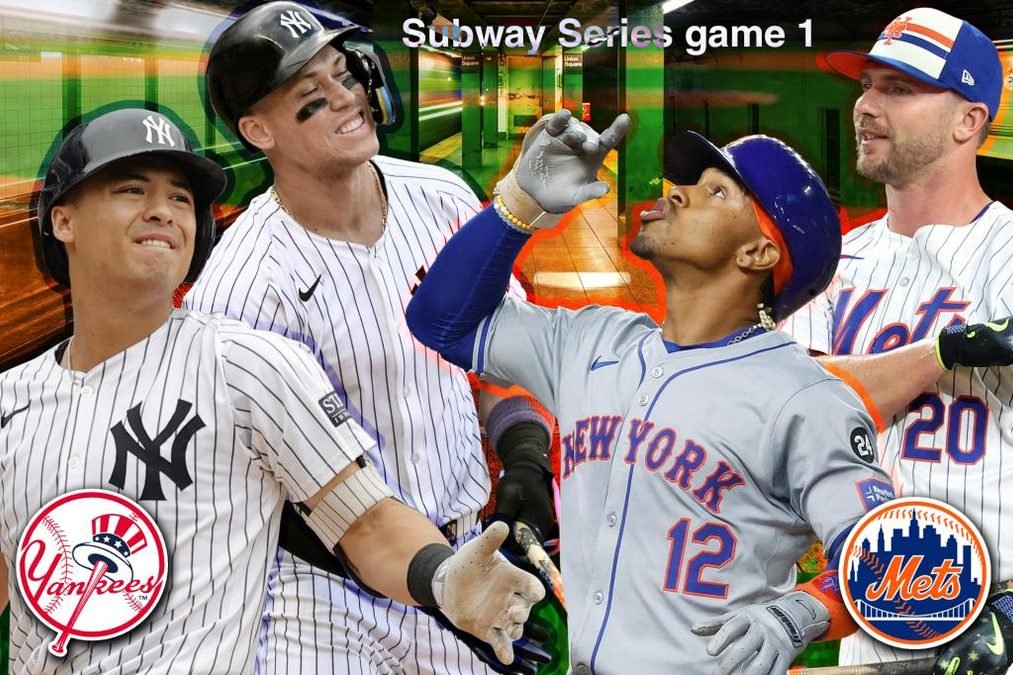
Before 1997, Mets and Yankees fans had no regular chance to see their teams meet in meaningful games. Baseball introduced interleague play that summer, and almost overnight a theoretical argument became a real one. The first regular season game between the two clubs took place on June 16, 1997, at Yankee Stadium. The Mets won 6 to 0 behind a complete-game shutout from Dave Mlicki, a pitcher few people expected to be the hero. The result stunned the Bronx, and it gave Mets fans an early reason to believe the rivalry would be a real contest rather than a one-sided affair.
Since then, the two teams have met every year, usually in a pair of mini series, one at each ballpark. The format has changed a few times, with the number of games varying depending on how the schedule is set, and in recent seasons the schedule has made room for all the clubs to see each other more often. Whatever the format, those games have become a fixture on the calendar, and each side circles them long in advance. Tickets are among the most expensive of the year, and the atmosphere in the stands has a postseason feel even though the standings are rarely affected.
The matchups also create fascinating strategic contrasts. Because the clubs live in different leagues, they play by slightly different rules in some respects, and the teams must adjust their lineups and benches depending on the park. The designated hitter question, which once divided the leagues sharply, has been settled by baseball adopting the DH universally, but the games still carry a flavor of a clash between two different baseball traditions. Fans understand that a regular season sweep in the Subway Series does not change a pennant race, but it changes a summer, and in New York summers matter a great deal.
Ballparks: Citi Field and Yankee Stadium
The setting of a rivalry matters, and these two ballparks could hardly be more different in feel. Yankee Stadium, located in the Bronx, is a monument to history. It opened in 2009 and was designed to echo the original ballpark in many of its details, including the white frieze that hangs along the top of the upper deck and the dimensions of the field itself. Monument Park, tucked behind the outfield wall, honors the legends who built the franchise, with plaques and retired numbers that read like a history of the sport. Walking through the gates feels a bit like entering a museum that happens to host a baseball game.
Citi Field, in Flushing, Queens, takes a different approach. It also opened in 2009, replacing the aging Shea Stadium, and it borrows from classic ballpark design with a brick facade inspired by Ebbets Field, the old home of the Brooklyn Dodgers. The Jackie Robinson Rotunda at the main entrance honors the pioneer who broke baseball’s color barrier, and the Home Run Apple, a beloved tradition that rises from a giant top hat whenever a Mets player homers, carries over from Shea. The food scene at Citi Field has become a major draw in its own right, and fans often argue that the quality of the ballpark dining beats anything the Bronx can offer.
Capacity and atmosphere also differ. Yankee Stadium holds a little more than forty-six thousand fans, while Citi Field holds somewhere around forty-two thousand. The Bronx crowd tends to be loud and confident, with the famous roll call in the first inning that salutes each starter in the field. The Queens crowd tends to be a little scrappier, quick to rally behind a team that has often needed it. When the Subway Series comes to town, the two ballparks produce very different energy, and fans who attend both often come away convinced that each has its own kind of magic. For anyone following Mets vs Yankees, a visit to both places is practically a rite of passage.
Fan Culture: Pinstripes, Orange, and Blue
Fan culture is where the rivalry really comes alive. Yankees fans are known around the world for their sense of tradition. The pinstripes have barely changed in a century, and the interlocking NY logo is one of the most recognizable symbols in all of sports. A Yankees cap shows up in every corner of the globe, worn by people who have never set foot in the Bronx. That global reach reflects a brand that has been built over generations, and it gives Yankees fans a certain swagger. They tend to expect success, and they tend to treat a championship drought as a personal affront.
Mets fans carry a different kind of pride. Their fandom is often described as a mix of loyalty and gallows humor, a willingness to stick with a team through thick and thin because the connection feels personal. The Mets have never been the favorite of the corporate world, and many of their fans take quiet satisfaction in that. They talk about the underdog spirit of 1969, the swagger and drama of 1986, and the resilient energy of the 2024 playoff run that captured the city’s imagination. When Tug McGraw rallied the 1973 club with the phrase “Ya gotta believe,” he captured something that has stayed with the fan base ever since.
Geography matters too. Broadly speaking, the Yankees draw strong support from the Bronx, Westchester County, and Connecticut, while the Mets are especially popular in Queens, Long Island, and parts of New Jersey. But the lines are blurry, and many families are split. It is common to see a household with one parent in pinstripes and one in orange, and the kids learning to choose between them. Neighbors tease each other at block parties, coworkers place friendly bets, and the argument never fully dies down. In the end, fan culture is where the rivalry feels warmest, because the teasing is rooted in a shared love of the game.
Legends Who Defined Each Side
Every great rivalry needs great characters, and both clubs have plenty. On the Yankees side, the list begins with Babe Ruth and Lou Gehrig, continues through Joe DiMaggio and Mickey Mantle, and extends into the modern era with Derek Jeter, Mariano Rivera, Jorge Posada, and Andy Pettitte. Jeter in particular became the face of the late-1990s dynasty, a shortstop whose calm demeanor and clutch performances made him a hero to a generation. Rivera, the greatest closer in baseball history, turned the ninth inning into a formality. More recently, Aaron Judge has carried the torch, setting an American League single-season home run record with 62 in 2022 and winning multiple MVP awards.
On the Mets side, the legends are different in style but just as beloved. Tom Seaver, known as Tom Terrific, led the 1969 Miracle Mets and remains the greatest player in franchise history. Dwight Gooden and Darryl Strawberry electrified Shea Stadium in the mid-1980s, and Keith Hernandez, Gary Carter, and Mookie Wilson helped power the 1986 champions. Mike Piazza, acquired in 1998, became one of the best-hitting catchers of all time and the emotional heart of the club after the September 11 attacks, when his home run in the first game back in New York gave a hurting city a moment of release. David Wright, Jose Reyes, and Jacob deGrom carried the banner through later eras, and Francisco Lindor has become a modern star.
Comparing these players is half the fun of the debate. Yankees fans point to the sheer volume of Hall of Famers and the depth of the dynasty years. Mets fans point to the emotional resonance of their stars, players who often felt like family. Yogi Berra, who played for the Yankees and later managed the Mets to the 1973 pennant, offered a line that fits both sides: “It ain’t over till it’s over.” He also gave baseball one of its most famous jokes, saying, “Baseball is ninety percent mental. The other half is physical.” Both quotes capture the gentle, playful side of a sport that takes itself seriously and yet never loses its sense of fun.
Ownership, Payroll, and Front-Office Philosophy
For decades the rivalry was shaped as much by money as by talent. The Yankees, under George Steinbrenner and later his sons, built a reputation as the big spenders of baseball. They were willing to pay for the best free agents, absorb large contracts, and treat the luxury tax as a cost of doing business. That approach helped fuel the late-1990s dynasty and kept the club in contention for most of the following two decades. Hal Steinbrenner, who now runs the franchise, has taken a somewhat more measured approach than his father, but the Yankees remain one of the wealthiest and most valuable clubs in the sport.
The Mets spent many years in a different financial situation. During the Wilpon ownership era, the club was often limited by financial pressures, and its payroll frequently lagged behind its market size. That changed in 2020, when hedge fund billionaire Steve Cohen purchased the team. Cohen made it clear he wanted the Mets to compete at the highest level, and he followed through with some of the largest payrolls in the history of the sport. Suddenly the Mets were no longer the little brother in the financial conversation. They became a team willing to spend aggressively, pursue stars, and challenge the Yankees for the biggest names on the market.
This shift has changed the tone of the rivalry in a significant way. For many years, Yankees fans could point to the payroll gap as a built-in advantage, and Mets fans could grumble that the playing field was uneven. Today the gap has narrowed, and both clubs sit among the highest spenders in baseball. That does not guarantee success, of course, since baseball is notoriously resistant to simple formulas. But it means the competition now feels more balanced than it has in decades, and it adds a layer of intrigue to every offseason, when both teams may chase the same star.
The Juan Soto Factor and the Modern Era
Few moves have captured the intensity of the modern rivalry like the signing of Juan Soto. After one standout season with the Yankees, in which he helped power the club to the 2024 World Series, Soto reached free agency and became the most sought-after player on the market. Both clubs pursued him aggressively, and the bidding escalated into one of the most dramatic free agency battles in baseball history. In the end, he chose to sign with the Mets, agreeing to a record-setting contract of more than seven hundred million dollars. The decision sent shockwaves through the city, and it instantly became one of the defining storylines of the rivalry.
For Mets fans, the signing felt like a statement. The club had finally beaten the Yankees at their own game, using the same financial muscle that the Bronx had long relied on. For Yankees fans, the loss stung, particularly because Soto had delivered such a strong season and seemed to fit so naturally in pinstripes. The story also underscored how much the dynamics of the matchup had changed. A decade earlier, it would have been hard to imagine the Mets winning a bidding war for the best player in baseball against the Yankees. The fact that it happened showed how far the franchise had come under new ownership.
The broader modern era has been full of intriguing contrasts. The Yankees reached the World Series in 2024 but fell to the Dodgers, while the Mets went on a magical run of their own, a late-season surge that carried them to the National League Championship Series, where they also fell to Los Angeles. The two clubs were playing great baseball at the same time, which is a rare thing in New York. Fans began to talk seriously about the possibility of a rematch of the 2000 World Series, and while it has not happened yet, the idea feels more realistic than it has in years. The next chapter of the rivalry may well be the best one yet.
Managers, Pitching, and Style of Play
The style of play in each dugout has often reflected the personality of the franchise. The Yankees have historically leaned on power, patience, and bullpen depth. During the dynasty years, they ground out at-bats, worked deep counts, and relied on a lockdown closer to finish games. Home runs have been part of the club’s identity since the days of Ruth, and the short porch in right field at Yankee Stadium has long rewarded left-handed power hitters. The modern club still builds around big bats and strong pitching, with an eye toward the kind of October baseball that wins championships.
The Mets, by contrast, have often been defined by their pitching. Seaver, Jerry Koosman, Gooden, Leiter, Pedro Martinez, and deGrom form a lineage of great arms that stretches across the franchise’s history. The 1969 championship was built on a young rotation, and the 1986 team relied on a mix of power pitching and timely hitting. Even in more recent years, the club has tended to prize starting pitching as the foundation of success. Citi Field has played as a pitcher-friendly park for much of its life, which only deepens the franchise’s reputation as a place where great arms thrive.
Managers have also played important roles in shaping each club’s identity. Joe Torre, who played for and managed the Mets before becoming a legend in the Bronx, led the Yankees to four championships in five years. Willie Randolph, a longtime Yankees second baseman and coach, went on to manage the Mets. Casey Stengel managed both the Yankees dynasty teams of the 1950s and the hapless early Mets. These overlapping careers show how closely the two organizations have been intertwined over the years, even as the fan bases insist they have nothing in common.
The Players Who Crossed the Line
One of the most entertaining parts of the rivalry is the number of players and managers who have worn both uniforms. Darryl Strawberry and Dwight Gooden, two of the biggest stars of the 1986 Mets, both ended up with the Yankees later in their careers and won championships in the Bronx. Gooden even threw a no-hitter in pinstripes in 1996, a moment that carried extra emotional weight given his famous history in Queens. For fans who had watched those two young stars dominate at Shea Stadium, seeing them in pinstripes was a strange and moving experience.
David Cone is another fascinating example. He pitched for the Mets in the late 1980s and early 1990s, then became a key member of the Yankees rotation in the 1990s. In 1999, he threw a perfect game at Yankee Stadium on a day that also honored Yogi Berra, a moment that has become one of the great stories in franchise history. Carlos Beltran, a star for the Mets in the 2000s, later played for the Yankees and eventually became the Mets manager, though that second chapter ended quickly. These crossovers remind fans that loyalty is a complicated thing, and that careers do not always follow a straight line.
Some of the most interesting stories involve managers. Torre played and managed for the Mets before winning his titles with the Yankees. Randolph spent more than a decade in pinstripes before taking over in Queens. Berra was a Yankees icon who later managed the Mets to the World Series. These shared histories give the rivalry a surprising amount of texture, and they show how closely linked the two organizations are beneath the surface. In a city that loves a good story, the people who crossed the line provide some of the best material.
How to Experience a Subway Series Game
Anyone who has the chance to attend a Subway Series game should take it. The atmosphere is unlike anything else in the regular season, with fans from both sides packed into the ballpark and trading friendly insults in the stands. Tickets can be pricey, particularly for weekend games, but the secondary market usually offers a range of options. A good approach is to check prices several days before the game and to be flexible about seat location. Even upper-deck seats at either ballpark offer a great view of the action, and the energy in the crowd is the real draw.
Getting to the ballparks is part of the fun. Yankee Stadium is easily accessible by subway on the 4, B, and D lines, and by Metro-North from Grand Central Terminal. Citi Field is reachable by the 7 train to Mets-Willets Point and by the Long Island Rail Road. A trip from one ballpark to the other typically takes an hour or so with a transfer, which makes it feasible to attend a game in each stadium during the same series. For travelers who want the full experience, spending a weekend catching both games is a great way to understand the city’s baseball culture.
A few small tips can make the day smoother. Arrive early to soak in the pregame atmosphere, explore the food options, and see the monuments and tributes each ballpark has to offer. Wear your colors proudly, but remember that the crowd tends to be good-natured. Heckling is common, but the vast majority of fans keep it friendly. And if you happen to be a visitor, resist the urge to choose a side too quickly. Some of the best conversations happen when you ask a local why they root for the team they do. For the curious fan, a Mets vs Yankees weekend is a perfect introduction to the city.
Which Team Is Actually Better?
This is the question that launches a thousand arguments, and the honest answer depends on how you define “better.” If you measure by championships, the Yankees win in a landslide. Twenty-seven titles is the highest total in North American professional sports, and their record of sustained excellence is unmatched. Their history includes dynasties, legendary players, and decade after decade of contention. For fans who value banners and tradition above all else, the case for the Yankees is difficult to counter.
If you measure by emotional impact and the sheer drama of the moments, the Mets have a strong case. The 1969 Miracle Mets are among the most beloved teams in sports history, and the 1986 championship run is a masterpiece of improbable comebacks. The club has produced moments of pure joy that fans still talk about decades later. Mets supporters would argue that a franchise founded in 1962 has done remarkable things in a much shorter period of time, and that its connection to its fans is unusually deep. For fans who value storytelling and loyalty, the case for the Mets is just as compelling.
The truth is that the question may not have a definitive answer, and that is probably a good thing. If the argument were settled, the rivalry would lose its spark. Each franchise offers something different, and each fan base finds meaning in a different way. The best approach may be to appreciate both clubs for what they bring to the city. Baseball is richer when two great teams share a town, and New York is richer when its fans care enough to argue about it year after year.
Conclusion
The story of the Mets and the Yankees is bigger than any single game or season. It is a story about a city that loves baseball so much it split into two camps and never looked back. It is about a team with a century of dominance and a team that rose from the ashes of the Dodgers and Giants to give National League fans a new home. It is about heroes like Jeter, Rivera, Seaver, and Piazza, and about moments like the 2000 World Series, the 1986 comeback, and the 1969 miracle. Above all, it is about the people in the stands, whose passion keeps the rivalry alive.
The modern era has made the matchup more interesting than ever. Both clubs have enormous resources, talented rosters, and ambitious ownership, and the competition for stars like Juan Soto has added new drama. Ballparks that opened in the same year give each side a gorgeous stage, and the Subway Series remains one of the most anticipated events on the schedule. Whether you cheer for pinstripes or for blue and orange, you are part of a tradition that connects generations of New Yorkers.
In the end, the debate over Mets vs Yankees is not really about who wins. It is about who cares, and in New York, everyone cares. The next time you hear a friend make the case for the other side, smile, grab a hot dog, and remember that a city with two great teams is a lucky city. The rivalry will keep evolving, new heroes will emerge, and another unforgettable October may be just around the corner.
Frequently Asked Questions
What is the Subway Series?
The Subway Series is the name given to games between New York City baseball teams, because fans can travel between the ballparks by subway. The term originally described World Series matchups between the Yankees and the Dodgers or Giants in the early and middle twentieth century. Today it most often refers to the regular season games between the Mets and the Yankees, as well as the memorable 2000 World Series. When people talk about the Mets vs Yankees rivalry, the Subway Series is usually the first thing they mention.
Who has won more games in the all-time series between the two teams?
The Yankees have held the edge in the regular season series since interleague play began in 1997, though the games have often been close and the lead has shifted at times. The Mets have had some strong stretches, including memorable wins in the early years and during recent seasons. Because the exact count changes every year, fans should check a current baseball statistics source for the latest tally. The more important point is that the games are almost always competitive and entertaining.
How many World Series titles does each team have?
The Yankees have won 27 World Series championships, the most of any franchise in North American professional sports, with their most recent title coming in 2009. The Mets have won two, in 1969 and 1986. The Mets have also reached the World Series in 1973, 2000, and 2015. The gap in titles is the most commonly cited statistic in the debate, though many fans argue that the memories created by each team matter just as much as the totals.
Who won the 2000 World Series between the Mets and Yankees?
The Yankees won the 2000 World Series in five games, clinching the title at Shea Stadium. Derek Jeter was named the Most Valuable Player, and the series is remembered for the twelve-inning opener, the bat-throwing incident between Roger Clemens and Mike Piazza, and a closely contested set of games. Many fans of both teams still consider it the defining chapter in any Mets vs Yankees conversation, and it remains the only World Series the two clubs have played against each other.
Where do the Mets and Yankees play their home games?
The Yankees play at Yankee Stadium in the Bronx, a ballpark that opened in 2009 and honors the history of the franchise with features like Monument Park. The Mets play at Citi Field in Flushing, Queens, which also opened in 2009 and replaced Shea Stadium. Both ballparks are accessible by public transportation, and visiting each one is a great way to experience the personality of the two fan bases.
Can you be a fan of both teams?
Absolutely, and plenty of New Yorkers are. Because the clubs play in different leagues, they rarely compete for the same postseason spot, which makes it easier to root for both. Some fans cheer for one team in the American League and the other in the National League, while others are strongly loyal to one side and simply respect the other. Baseball is big enough to hold a lot of love, and the city is better for it.